Building a blissful bond with your helper: Coreen and Darsiti
Reading time: 4 mins
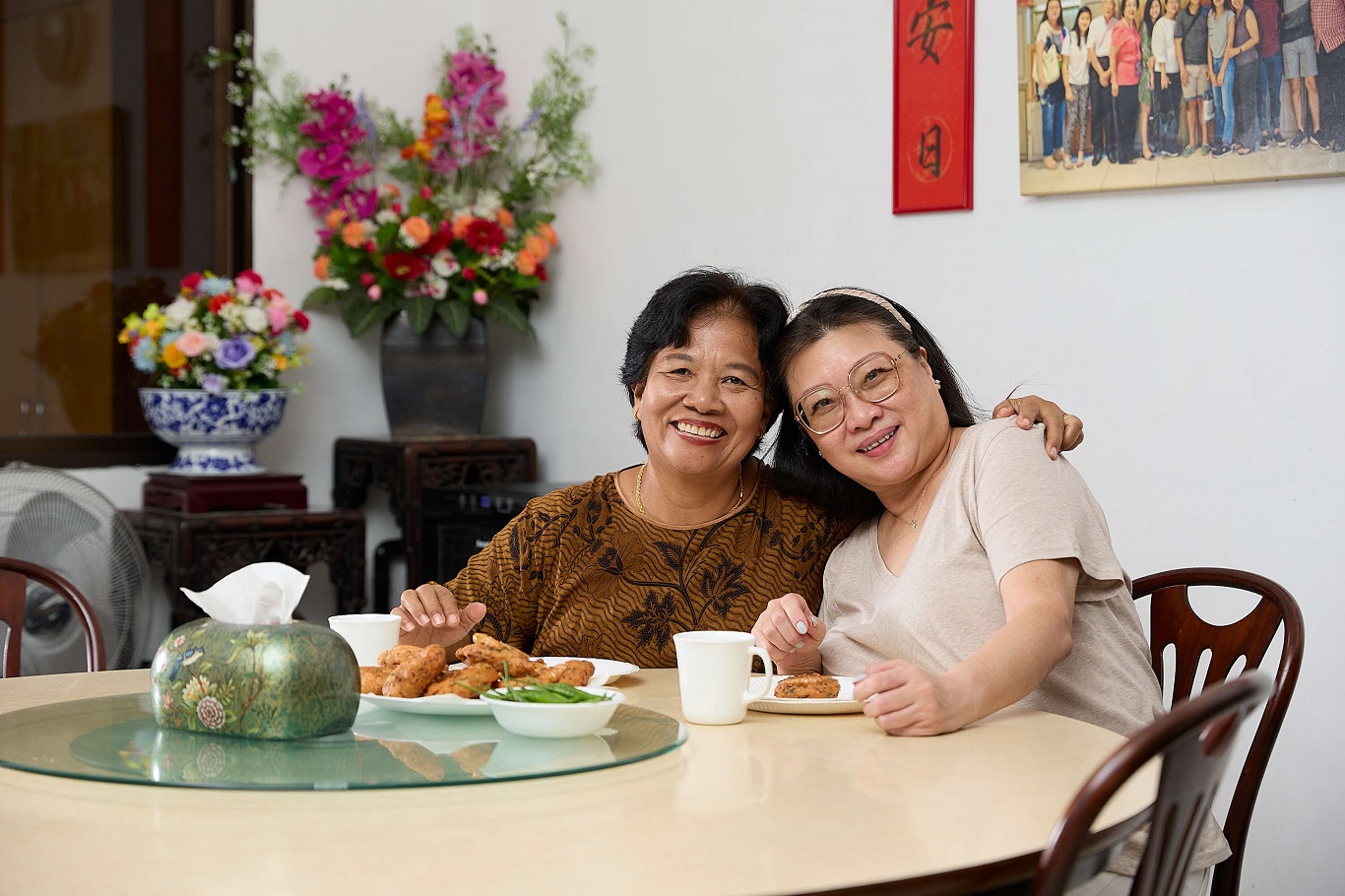
Darsiti (left) with her employer Coreen Chua.
In some households, the relationship between an employer and a migrant domestic worker (MDW) remains strictly transactional. For employer Coreen Chua and MDW Darsiti Darwaji, their 26-year journey tells a different story. One that earned Coreen the 2025 Employer of the Year award from the Association of Employment Agencies Singapore (AEAS).
The journey to the award came from an unexpected source: Darsiti. She had nominated her employer Coreen for the honour in a touching testament to their bond which was nurtured over the years through patience, understanding, and genuine care.
Adapting to a new home
When Darsiti first arrived in Singapore in 1999 from Indonesia to help with Coreen's newborn son, she felt lost at times.
She had to adapt to a new country, new places, new languages, new ways of living and doing things, each by itself was a daunting task.
Darsiti approached each day with apprehension, unsure if she had completed her work the right way, or if her employer would suddenly send her back home. It felt overwhelming at times.
Recognising this, Coreen decided to make the adjustment process more manageable with a step-by-step approach. "In the beginning, it was all about the basics, teaching her simple English words for household chores like 'sweep' and 'mop'”, Coreen explained.
Once Darsiti became more proficient in English, Coreen progressed to let Darsiti know her preference on how she liked each task to be done. Avoiding vague instructions reduced mismatched expectations and also built Darsiti’s confidence steadily.
To complement these, Coreen brought Darsiti around the neighbourhood to familiarise her with the surroundings so the MDW would not feel so lost. At the wet market, Coreen’s parents showed her where to buy groceries and how to pick the freshest ingredients.
Instead of assuming that Darsiti could cook the way they liked, they guided her through meal preparation. They shared cherished family recipes and techniques, and gave her time to adapt.
These early interactions went a long way in helping Darsiti settle in, and turned what could have been months of mutual doubt into a period where trust was built daily. Darsiti became a welcome sight and reliable helper, always ready to keep things at home spick and span.
A welcome return
After a few years, Darsiti returned to Indonesia to marry and start her own family. In many families, this would mean the end of a chapter, with employer and employee parting ways for good.
Not in the Chua family though. When Coreen learned that Darsiti was looking for work again in 2009, she suggested that the helper rejoin the Chua household. Naturally, Darsiti agreed to start her second chapter with the family.
"I knew Darsiti was more than a helper when I saw the way she doted on my children," Coreen shared. “For example, on my son's 11th birthday, she surprised us by cooking Nasi Kuning (yellow rice), a delightful festive dish that Indonesian families prepare for special celebrations.”
The gesture remains a treasured memory, but it wasn’t just the big occasions that mattered. Coreen also appreciates the little things, like how Darsiti cares for her parents, taking the initiative to ensure they never missed their medication without Coreen even having to ask the dutiful helper to do so.
From helper to family
For Darsiti, feeling part of the family wasn’t about any single milestone. Rather, it was the everyday moments that made the difference.
“We eat meals together at the same table and share the same food,” Darsiti explained. “Grandpa and Grandma call me ‘anak’ (child) and allow me to decide what to cook for the family. I can even try out recipes I found on social media!”
This level of trust and inclusion transformed the Chua household from Darsiti’s workplace into her home. “I'm not just working in a house; I'm living with my family," she proclaimed.
The secret? Treat them as one of your own
People often ask Coreen the “secret” to keeping the same domestic worker for over two decades. Her answer is refreshingly straightforward: "Treat her as part of the family, not an outsider."
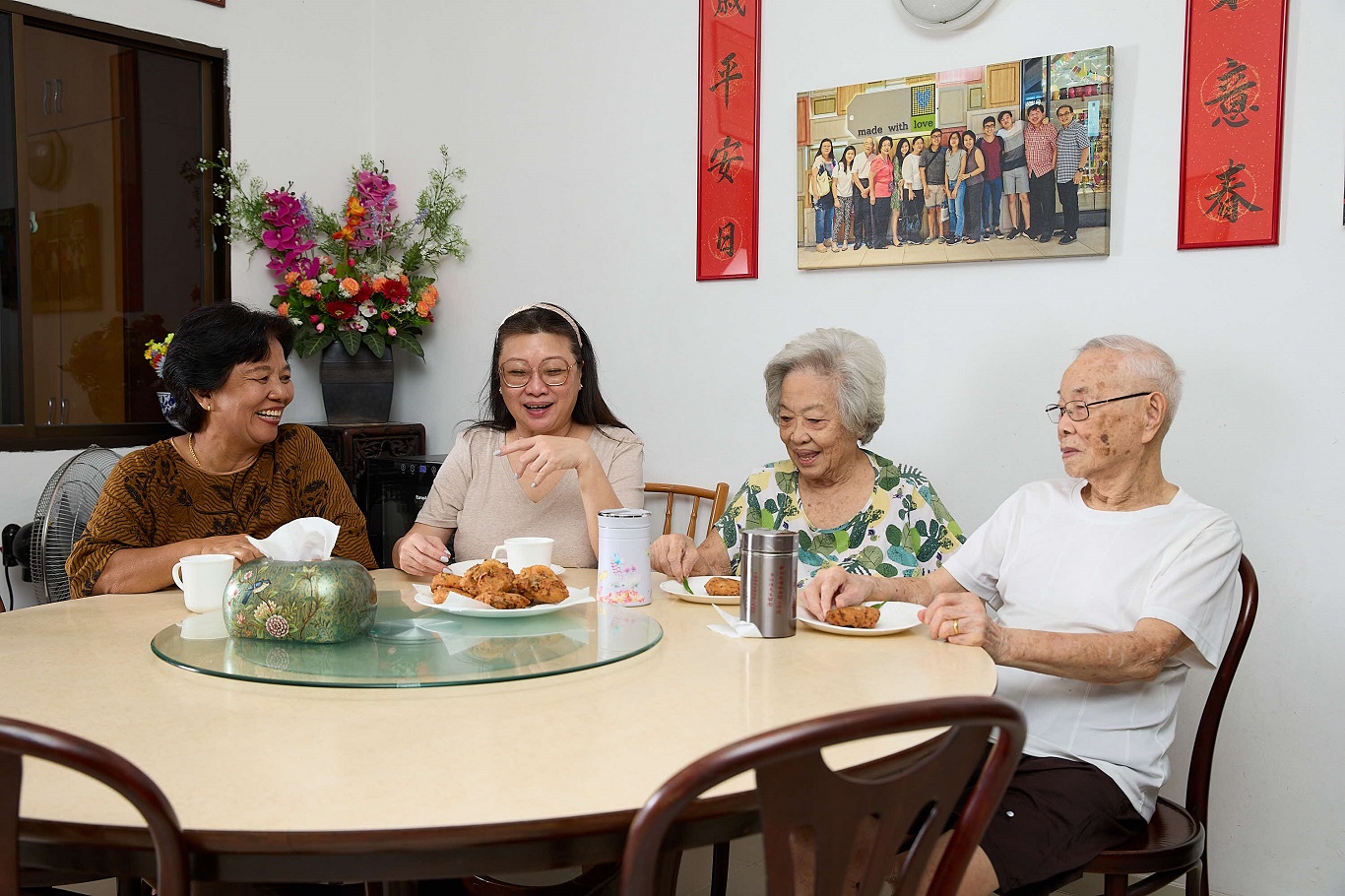
Darsiti, Coreen and Coreen’s parents having afternoon tea together.
In Coreen's household, everyone sits together, sharing stories alongside dishes like Coreen's mother's chicken rice or Darsiti's Ayam Penyet. This daily ritual of togetherness has become a cornerstone of their relationship.
The resulting cultural exchange enriched the family. Coreen’s children have grown up appreciating Indonesian traditions alongside their own. Today, Coreen's daughter considers Darsiti a confidante, someone she turns to for advice and conversation. That level of emotional trust speaks volumes about the place Darsiti holds in their lives.
Supporting growth beyond the home
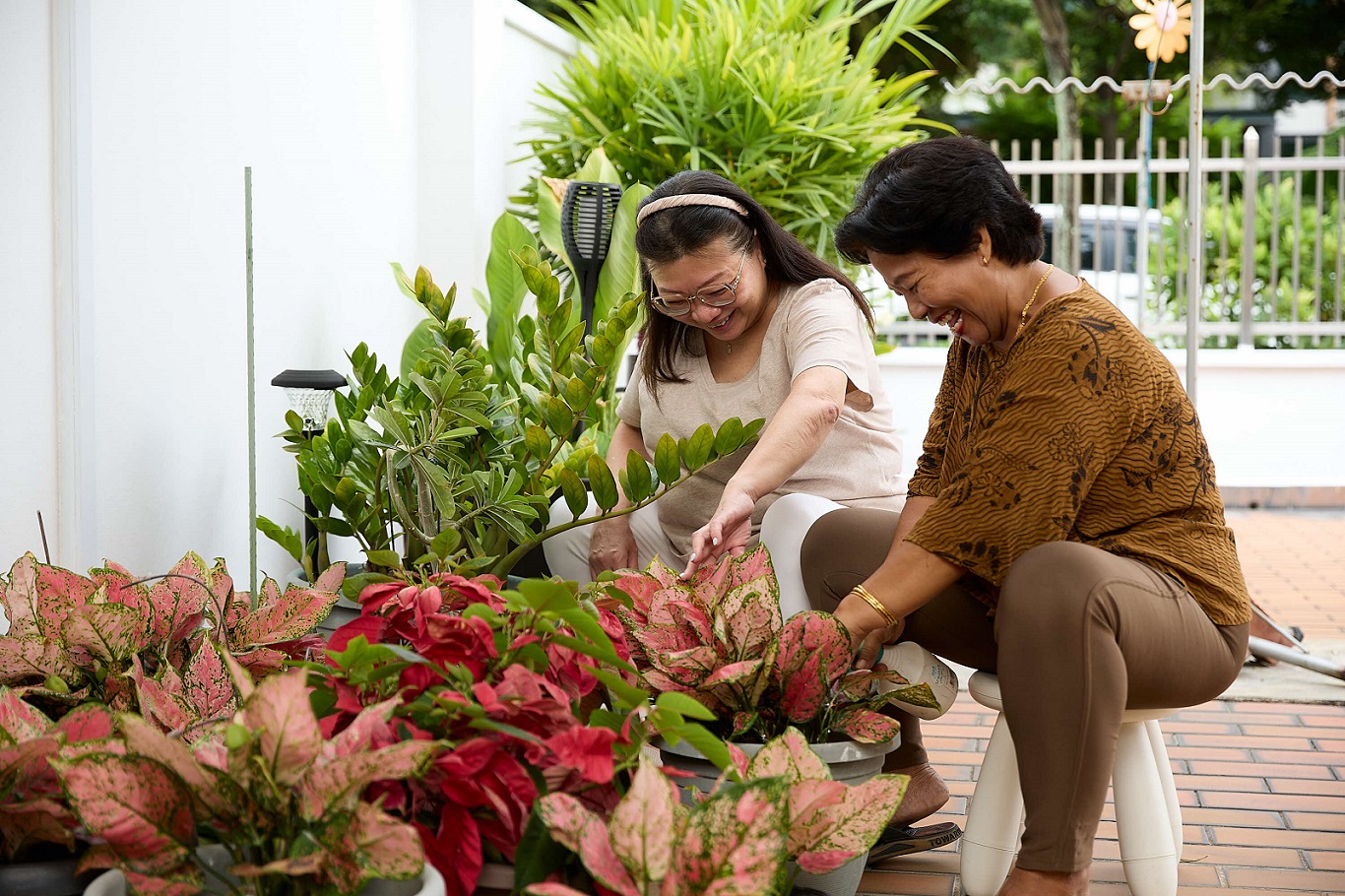
Darsiti shares the gardening tips she has picked up over the years.
Coreen's support extends beyond household walls. When Darsiti expressed interest in learning new skills, Coreen encouraged her to attend courses at the Indonesian Embassy. Darsiti has since learned CPR and studied financial literacy and entrepreneurship. “Allowing her to learn gave her self-confidence,” Coreen noted.
The trust between them runs deep enough that when Darsiti's son visited Singapore, Coreen hosted him for two weeks. Darsiti, now 56, said confidently, "Coreen is the best boss I’ve worked for because she treats me as family."
Tips for new employers
For employers wondering how to build similar relationships, Coreen offers this guidance: "Be patient. Understand that they're here to make a living to support their loved ones back home. If you make their life welcoming and treat them well, they are likely to reciprocate that kindness."
Coreen’s bond with Darsiti was built through kindness, respect and the choice to share meals together.
Coreen and Darsiti's story shows that the best domestic arrangements aren’t built on contracts alone. They’re built on respect, kindness, and sharing a meal at the same table, where everyone has a seat, and everyone belongs.